
About
What I write about
XingHua's independent blog on investing, computing, the philosophy of science and other general knowledge, with some everyday life mixed in — a place where an ordinary human keeps notes on learning, thinking and living.
Start here
- A Wrong Map Is Better Than No Map
- A Short History of the Web: The Key Threads
- Energy Is the Precondition for Living Well
- The Kuaibo Case and the Standing of Technological Neutrality
- Clock Towers and the Revolution of Time
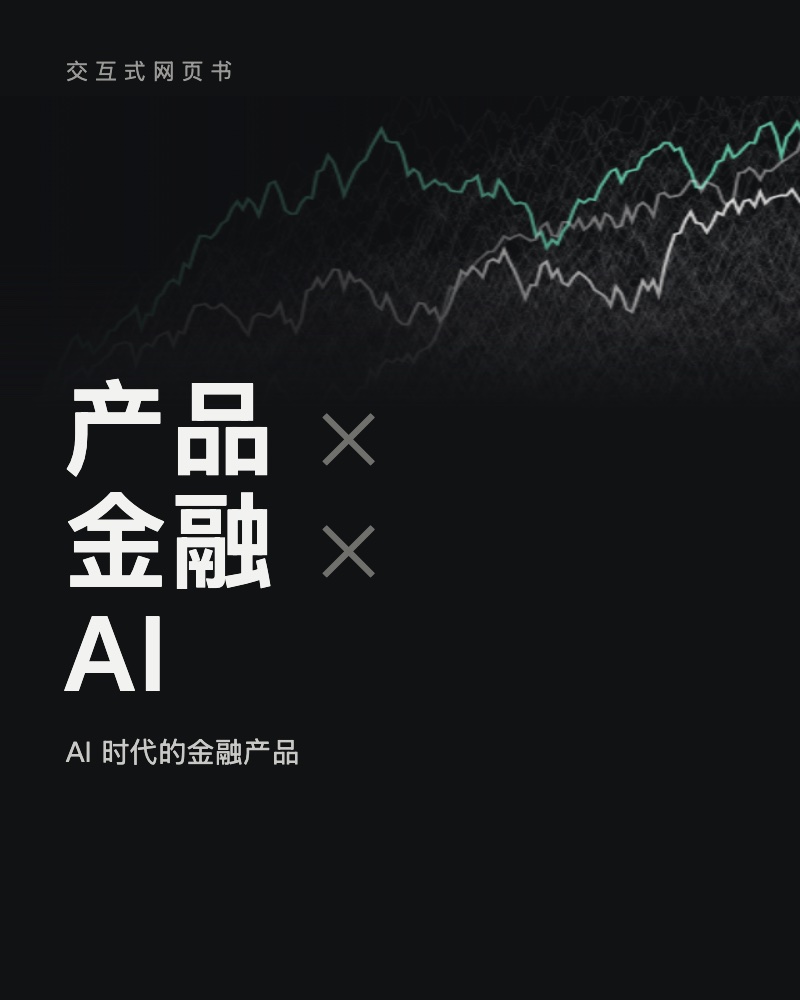 Product × Finance × AIInteractive web book · Ongoing
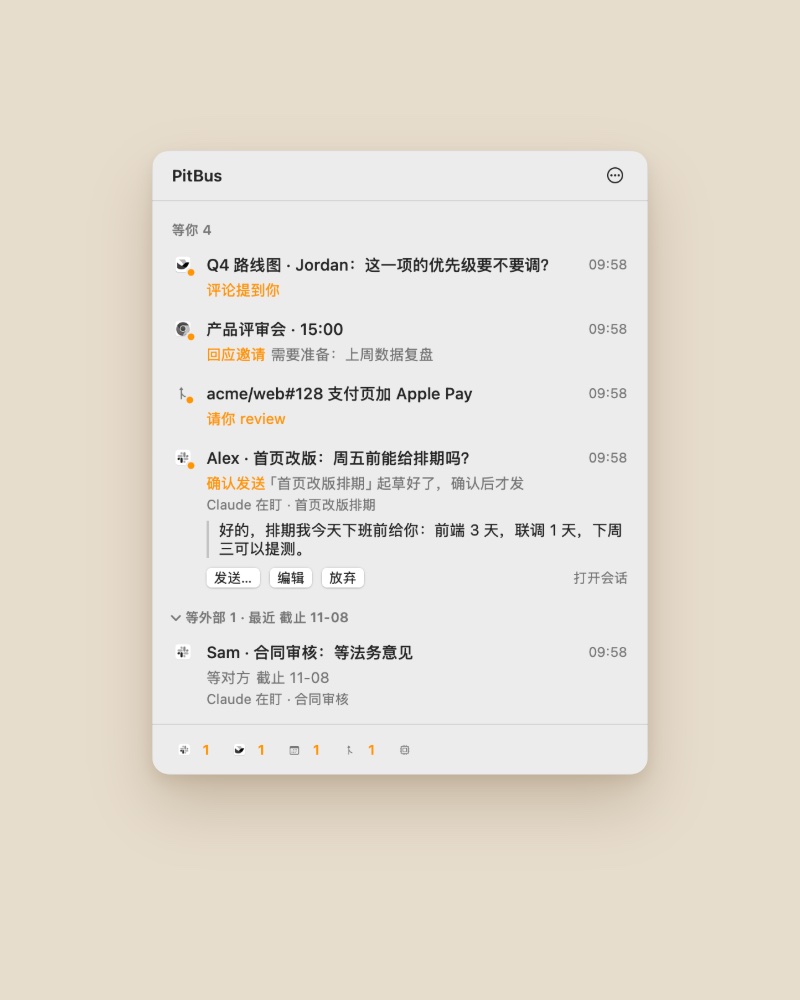 PitBusmacOS menu bar app · Open source
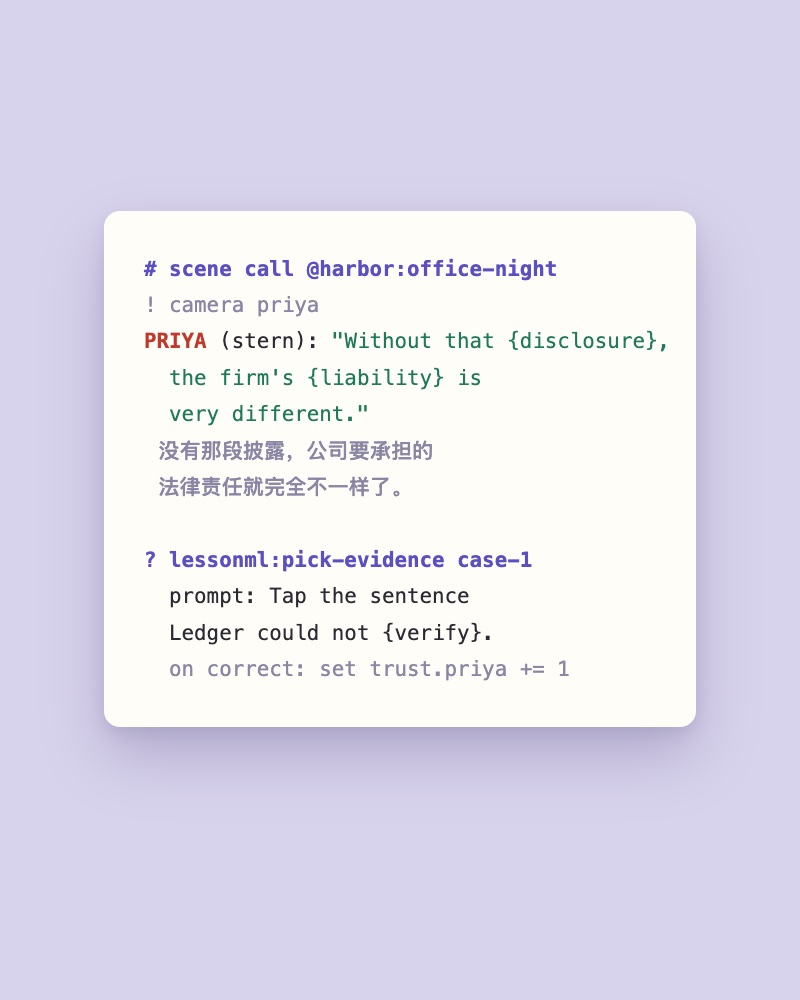 LessonMLProgramming language · Open source · Early draft
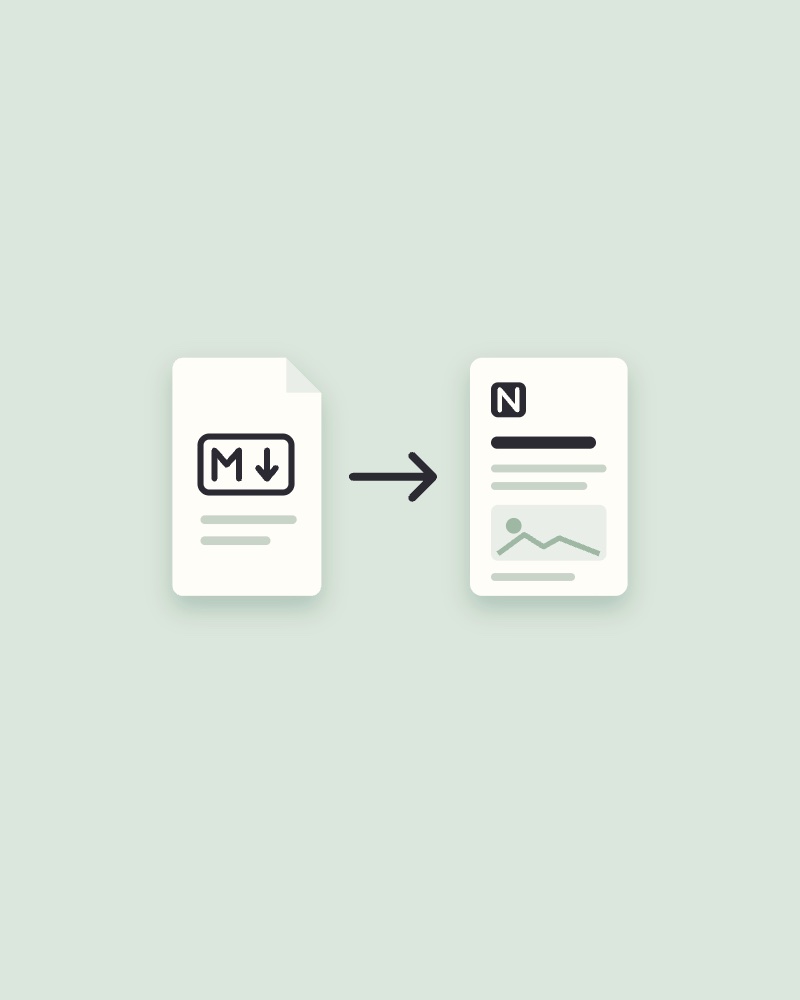 Markdown to NotionTool · Open source
About me
I keep the "about me" pages I wrote at different ages here.
About Me, 2024
In the end, an "about me" is really about how a person defines themselves.
Reading the self-introductions I wrote when I was younger — degrees and job titles all piled on top of each other — always makes me cringe a little.
Suppose you took everyone in society apart and compared them trait by trait — personality, character, talents — and found the "greatest common set" of ingredients. That set would be the part all humans share.
Some of it is biological, and some is learned through socialization. Each of us starts as a small biological creature and gradually learns to fit into society, picking up what parents, siblings, friends, teachers and classmates hope we will have, until we finish becoming social beings.
But because of talent, environment and experience, every person also has parts that fall outside this common set. Those parts set them apart from people in general, and they make up that person's individuality.
An "about me" is obviously more about the latter, especially if you're fairly comfortable with your own individuality. All in all, through repeated revisions, I hope that by the time I die this "about me" will read like the outline of my autobiography.
After writing the 2016 version, I still felt lost about the world. I had a very happy family and relationship back then, so my biggest confusion was about my career.
Career
In 2016 I wrote:
I want to be a real engineer
But what the hell is a "real engineer"? Looking back from where I am now, I didn't know. I had neither the experience nor the understanding to define it clearly. I'd studied computer science in college under A-Huang's influence, then watched how good some people around me were and longed for the world of the experts, so I wrote down that goal without really knowing what it meant.
Sure enough, the next few years took me further and further from becoming a top software engineer, and I grew more and more eager to move toward product. In hindsight, if the key person in my transition from high school to college was Huang Wentian, then a key person in my move from engineering to product was Ye Yuanfeng. The ease he had with engineering, and a capacity for growth that never seemed to hit bottom, made me realize I wasn't an engineer with that kind of spark, and that my ceiling on that path was low.
From 2015 to 2018 I worked very hard to make up for my technical weaknesses, but I never saw myself building any real advantage. Worst of all, I gradually found I was less and less interested in pure technology. "How the hell did I even get into ByteDance? Was it because I knew Xiaobai and Zesi went easy on me?" That thought was half a joke, but without solid ground to stand on I really was anxious all the time — commuting mechanically every day, looking busy but getting nowhere, and, scariest of all, slowly burning through my enthusiasm for life.
In the last couple of years I've often thought of two well-known sayings:
Li Dazhao's version: when you study, study for real; when you play, play to the full
The Western version: Play hard, work hard
From my own experience, the balance between work and life is the same. Office workers spend 60% of their time at work, and numb work eats away at your enthusiasm for life. If I'd found my direction earlier, maybe I could have lived those years better.
So I used my job as an opportunity to start learning interaction and product design. That was also when I recognized one of my strengths: breadth. Computer science and philosophy of science from college, the technical skills from my first two years at work, and a somewhat idealistic altruism could all be put to more visible use in product work. So in ByteDance's internal talks I gave An Introduction to Material Design and the Theory Behind It and A Short History of UI, and I also correctly predicted the outcome of a debate at Neihan Duanzi over whether to remove the top comments from the feed to drive clicks into detail pages.
Then in 2018 Neihan Duanzi was shut down, and I took the chance of an internal startup, Paofu Community, to move from engineering into product. Obviously, after the switch things didn't go as smoothly as I'd imagined. Part of it was that my professional skills needed to be refined and filled in, but two problems were more serious:
- A clash of values. — Compared with engineering, product work faces questions of values much more directly. As someone with a strong distaste for consumerism, racking my brains over how to grow a consumer community was genuinely painful. Things only started going well after I left Paofu for Lark (Feishu).
- The window for internal startups at a big company, and trust from leaders. — Not much to say here. Everyone has to eat; business is business. The younger me criticized it; the current me understands.
Of course, right after moving to Lark I ran into a bottomless problem: designing a complex permission system. Looking back it's almost funny — my first two years in product were all on hard mode.
What came after: in 2020 I left ByteDance and took a three-month gap to think about my future, and eventually chose investing. Thanks to some luck I didn't land in hard mode again. After several years of going deep, I'm sure this is the career I love. The skills it needs span academia and industry, and it's full of challenges; the information I see and the things I do are never far from ordinary life; and the value of my work is to give every investor better tools and help them live better.
Especially in the last year or two, as my job has pulled me back into technology more and more, I've found that the things I didn't understand seven or eight years ago have somehow become obvious. It feels as if I finally understand the precondition for the "become a real engineer" I wrote down back then — an understanding of human activity and the framework of world knowledge, and of how engineering is embedded in that framework. Without that understanding, no one can become a real engineer. And the truly gifted engineers I've met all went through this process very early in life, without exception.
Life
As the Chinese saying goes, life is shaped first by fate, then by luck, then by feng shui.
By "fate" I mostly mean a person's character. It runs through and shapes a whole life, and it shows up in every decision.
I'm someone who sometimes gets melancholy, but at my core there is an optimism that holds on inside pessimism. Since 2016, a few things have shaped that core the most: breaking up with Xiaobai in 2017; my mother's breast cancer diagnosis in 2019 (she's recovering well now); the birth of my daughter Ding Yao in early 2020; and Zen Buddhism, which I first encountered through Yu Xin and began to truly understand in 2020.
All in all, after a dark period of my life, I've basically come to accept the ideas of Zen, and absorbed further the thinking of the I Ching that I'd first met in college. I've left behind the habit of seeing life and problems in binary oppositions and have started to feel at peace with myself. Everything in the past has its causes; I won't forget it, and it won't weigh on how I live now.
The other thing is that I chose to live in a lot of cities. I left Beijing after seven years, lived in Shanghai for almost a year, then in Shenzhen for almost a year, and finally settled in Hangzhou.
I don't know how luck or feng shui really works, but as I understand it, it means finding an environment that feels comfortable while still offering some challenge:
- Beijing was great in every way for me, but too expensive
- Shanghai is expensive, and has a bourgeois air I can't stand
- Shenzhen is just as expensive, and its climate and vegetation felt too exotic to me
Whatever the feng shui and opportunities of these cities themselves, none of them was an ideal place for my character, at least not at this stage. Part of me is an optimist, but not enough to keep me going in those cities. I was anxious the whole time I was there.
I feel comfortable in Hangzhou. Both the climate and the cost of living fit me reasonably well. Maybe that is my "feng shui", so I settled here, and I expect to stay put for a few more years.
Creating
After my career direction settled down, I gradually formed a long-term ambition related to education and investing. I believe these two things can help everyone become better, so I'll treat them as my life's work.
Creating is continuous in the long run and discrete in the short run. I've come to believe something Shen Zhenyu often says: if you keep something in mind, it will eventually echo back.
About Me, 2016
The rambling version
An academic type
Someone who always wants to trace the ocean of knowledge to its sources
Studied computer science and the history of science
Loves science fiction
Dreams of sneaking into academia
Currently stuck in the coder world
But doesn't want to be a code monkey — wants to be a real engineer
–
The actual bio
University: Beihang University
Major: Computer Science and Technology
Degree: Bachelor's
Current job: Front-end engineer
Direction: A real front-end engineer
Other interests: History of science and philosophy of technology
This site
Posts are written in Markdown in Aim, a writing workbench I built myself, then assembled into static pages by a script that uses only Node’s built-in modules. The site is hosted on GitHub Pages, with comments by giscus.